Hornchurch is an interwar town. The population went from 10,891 in 1921 to 28,417 in 1931 and 79,908 by 1951, and most of that growth was semis and short terraces put up fast once the railway was electrified. Elm Park was 500 houses at its 1935 launch and 2,100 more by 1939. Upminster was fully built up by 1938. These houses were designed around a bay window, a side passage and, at best, a timber garage for a single small car at the back. Ninety years on they are asked to park two vehicles a good deal bigger than anything Costain’s buyers owned, and the front garden is where that happens. This post compares the three surfaces we lay most on these houses - resin bound stone at £80 to £120 per square metre, block paving at £75 to £115 and tarmac at £55 to £80 - against the things that actually decide the result on a 1930s semi: the narrow side drive, the planted strip worth keeping, the clay or gravel underneath, and what each surface looks like after fifteen winters.
The houses Hornchurch was built from
Walk Avon Road, Chelmsford Drive or any of the Costain roads in Elm Park and the pattern repeats: a pair of semis with a shared ridge, a bay to the front, a recessed porch, and a gap down one side just wide enough for the car of the day. Grey Towers, the Victorian mansion, was pulled down in 1931 to free its grounds for exactly this kind of building. Costain bought Wyebridge, Elm and Uphavering farms in 1933 and announced 7,000 houses on 600 acres, financed with the Halifax Building Society and marketed as Elm Park Garden City; the council took wider roads, a railway bridge and the land for Harrow Lodge Park in return.
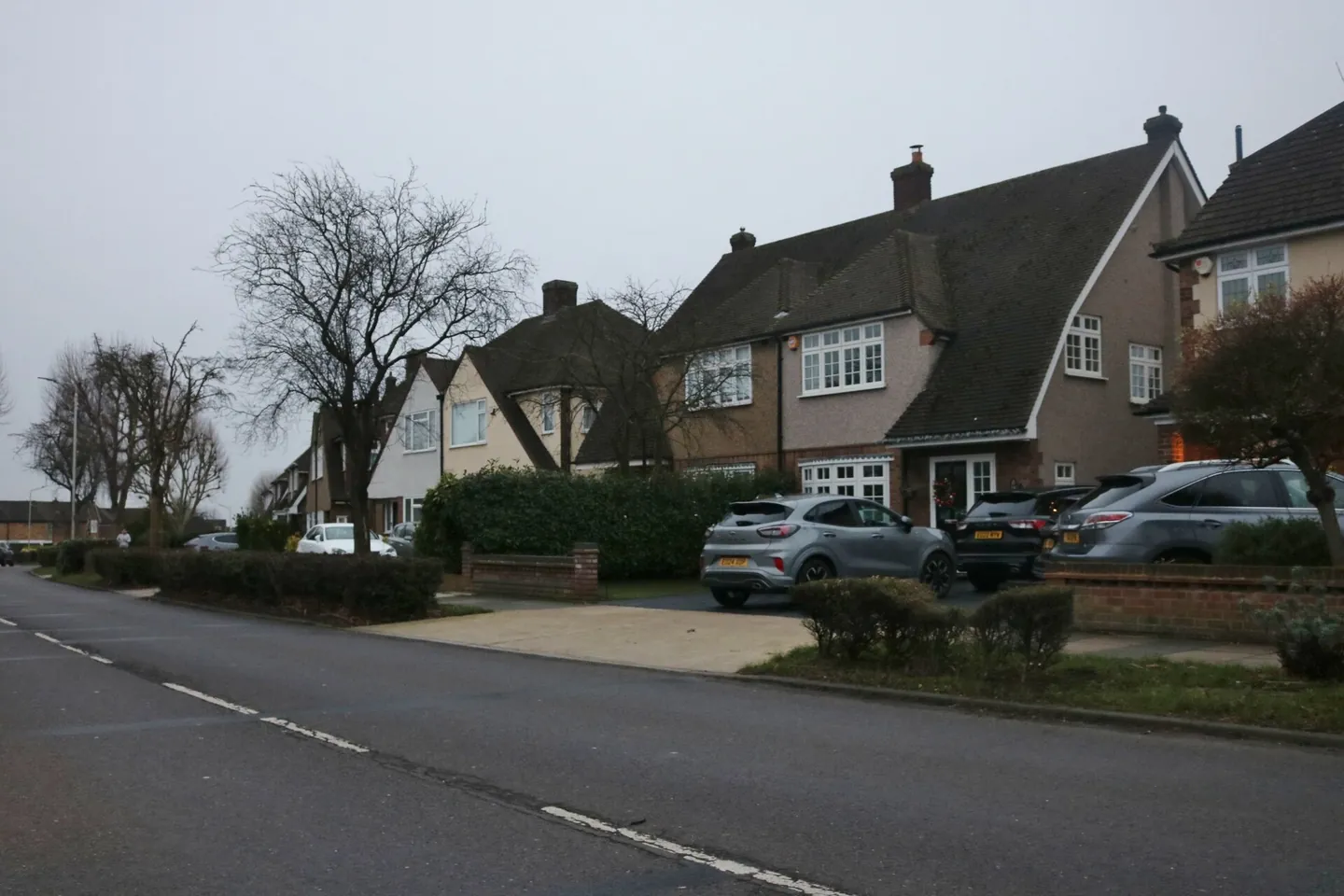
Upminster went the same way a generation earlier. Peter Griggs launched the Upminster Garden Suburb in 1906 on land bought from the Branfill family, with the bigger houses and gardens of up to half an acre north of the line and smaller homes and shops to the south. Other builders filled in after the First World War. The result, across both towns, is a housing stock that is handsome, consistent and built to a budget, with front gardens of roughly 40 to 50 square metres and a side passage that was never meant for anything wider than an Austin.
The surface you choose has to live with that. A resin bound driveway in a loud colour or a block pattern lifted from a supermarket car park will fight a 1930s front elevation every day. The ones that work are the ones that could have been there when the house was new.
A side drive built for one small car
The side passage is the problem the brochures do not talk about. On the semis we measure around Hornchurch and Upminster the gap between the flank wall and the boundary fence is often tight enough that a modern family car clears both sides by a hand’s width, and anything with mirrors wider than that does not go down it at all. The garage at the end, if it has survived, is a timber or asbestos-roofed box that a 1930s car fitted and a 2026 one does not.
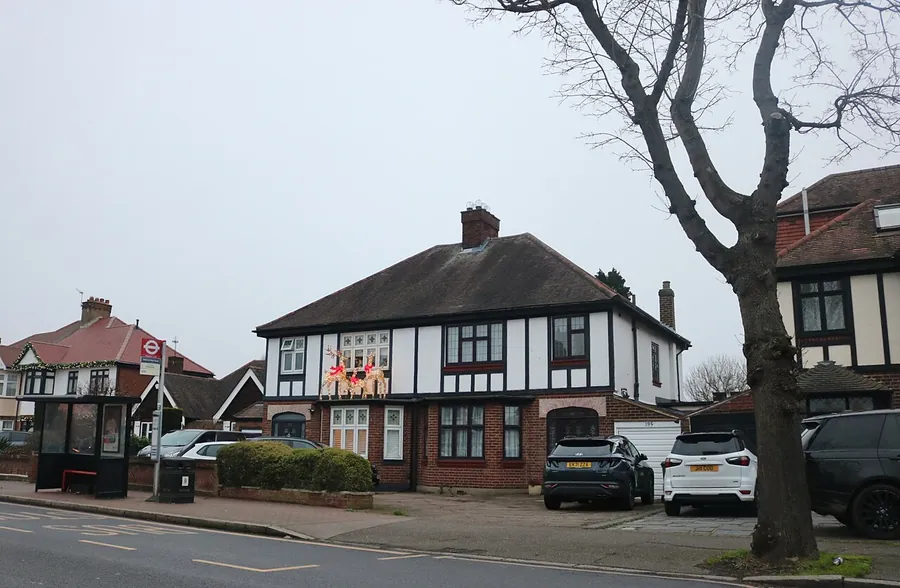
So the passage is fixed. You cannot widen it without moving a house, and it ends up as a path or a single-car slot rather than the main parking. The front garden does the real work: take the surface across the front and the car can turn in and stop square to the bay instead of threading the gap. Two cars on a 45 square metre front means side by side, and side by side means the surface runs nearly boundary to boundary, which is where the planted strip question below comes in. The old garage is usually worth keeping for the bikes and the mower. Running a new surface all the way up to a garage the car cannot fit in is money on the ground for no parking.
Whichever surface you pick, the layout decision comes first. Our cost guide for Hornchurch and Upminster has worked totals for the 45 square metre front, and the figures there assume the whole front is surfaced, so a layout that keeps a border comes in under them.
Resin bound on a 1930s semi
Resin bound stone is natural aggregate mixed with a clear resin and trowelled flat over a solid base. It is smooth, it drains through itself, it does not grow weeds in joints because there are no joints, and in a buff, oatmeal or mid-grey blend it sits well against both red brick and the render some Hornchurch semis have picked up since.

Where it falls down:
- It needs a base that will not move. Resin is 15 to 20 mm thick and has no strength of its own; a crack in the base is a crack in the resin. On an old concrete slab that has stayed flat it is excellent. On a new sub-base over London Clay it needs a bound base, usually open-graded tarmac, underneath, which is why it tops the price range.
- Repairs do not disappear. A patched area in resin is visible because the resin yellows slightly with age and the new mix does not match the old. Choose a UV-stable resin or the mismatch gets worse.
- Edging has to be solid before the resin goes down. The edge is doing all the containing, so on a semi that means a brick or sett soldier course or a concrete edge set in concrete, not a plastic strip.
- Costs the most of the three, at £80 to £120 per square metre installed.
Where it earns its price on an interwar house is the front that is seen from the pavement every day and wants to look like a garden path rather than a car park. It is also the simplest answer to the permeable surface rule, as long as the base beneath it drains.
Block paving on a 1930s semi
Block paving is the surface most 1930s fronts in Hornchurch already have, which tells you something. It is a unit system: small concrete or clay blocks laid on sharp sand over a compacted sub-base, with the joints filled and the whole thing vibrated down. A block paving driveway in a dark multi or charcoal with a contrasting edge looks right on red brick, and a clay paver in a brindle tone looks even better on the older Edwardian houses around the St Andrew’s end of town.
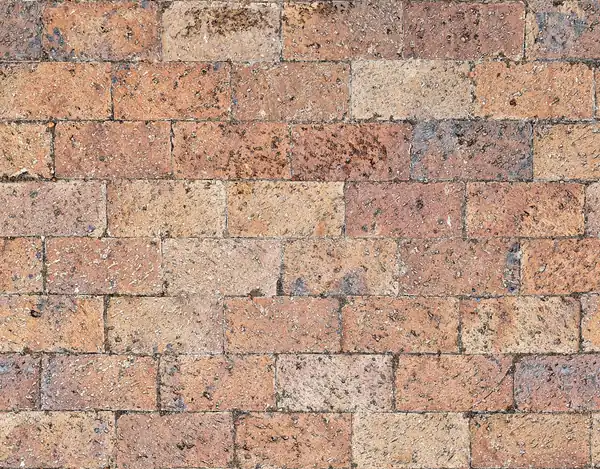
What you are buying:
- It can be taken up. A settled corner, a trench for a new water main, a drain repair: lift the blocks, fix the base, relay the same blocks. No other surface here offers that.
- Joints grow things. Sand joints take moss and weeds unless treated or sealed; a permeable block with a crushed stone joint does better but costs more.
- Permeability depends on the spec. Standard blocks on sand are not permeable in planning terms unless the drive falls to a border. Permeable blocks on an open-graded base are. Ask which you are being quoted for, because the Planning Portal’s rules on paving a front garden without permission turn on the difference.
- Patterns matter. Herringbone at 45 degrees locks the surface against wheel turning; stretcher bond looks calmer on a small front but moves more under a car that swings in off the road.
- Price sits in the middle, £75 to £115 per square metre.
For a two-car front that will be reversed onto twice a day for twenty years, block paving is the surface we would put on our own house.
Tarmac on a 1930s semi
Tarmac is bitumen-bound stone laid hot and rolled. It is the cheapest of the three at £55 to £80 per square metre, it goes down in a day, and on a long side run to a garage it is hard to argue with. A tarmac driveway edged in brick, with a block paved apron at the front, is a sensible compromise on a budget.
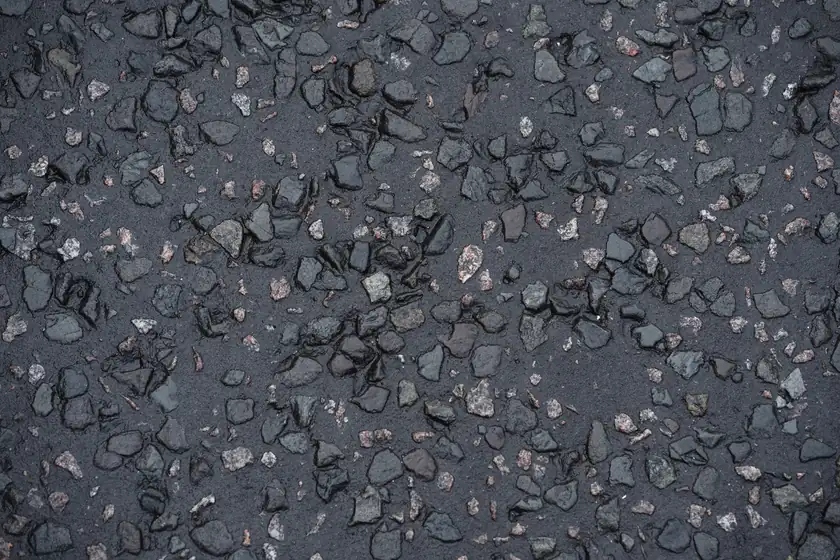
The problems are mostly about how it ages:
- Edges fail first. Tarmac with no restraint crumbles at the boundary within a few years; it needs a kerb or soldier course like everything else, and that cost is often left off the cheap quote.
- It softens in heat. A car parked in the same spot through a hot July leaves dents, and power steering turned on the spot scuffs the surface.
- It is impermeable. A tarmac front over 5 square metres has to fall to a lawn or border, or drain through a channel to a soakaway, or it needs planning permission. On a clay plot where soakaways struggle that can be awkward.
- It does not repair invisibly either. A patch is a patch; after ten years the whole thing is usually resurfaced rather than mended.
- In black it reads as a car park against a 1930s front. A red or grey tarmac helps, as does keeping the planted strip.
If the budget only runs to tarmac, spend the saving on the edging and the drainage. A well-edged tarmac drive with a proper fall lasts far longer than a cheap block paved one on a thin base.
Keeping a planted strip
The best 1930s fronts in Hornchurch still have a hedge. Most of the surviving hedges are privet, and a clipped privet or a low brick wall with a bed behind it does more for how the house reads than any paving choice. It also does three practical jobs: it takes the rain from the drive, it stops the surface running right up to the pavement where the edge fails, and it keeps the house from looking like it has been converted into a forecourt.
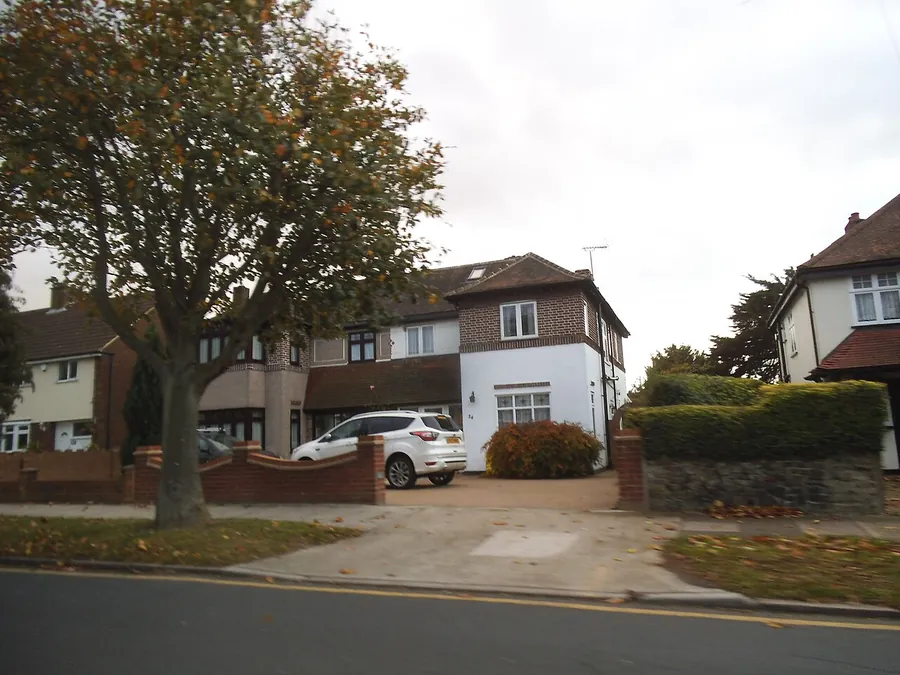
On a 45 square metre front, a 600 mm bed down one side and across the front costs you around 8 square metres of parking, which is less than it sounds: two cars still fit, they just fit tight. What you gain is a border that counts as the permeable area the planning rule asks for, so a standard block or tarmac drive falling towards it does not need an application. On the scheduled streets of the Gidea Park conservation area that planted front is not optional; the council’s Article 4 direction means any front hard surface needs permission there, and our post on driveway planning permission in Havering explains why the inspector at 49 Heath Drive ordered a paved front to be removed.
Where the bed goes matters. Along the boundary with the neighbour it hides the join between two different drives. Along the pavement it holds the kerb line. Against the house it keeps splashback off the brickwork, which on a 1930s solid wall with no cavity is worth having.
Drainage: clay to the north, gravel to the south
Hornchurch sits across a geological line, and it decides more about your driveway than the catalogue does. South Hornchurch, Elm Park, Rainham and the southern half of Upminster are on Thames terrace sand and gravel under a layer of loam. Water goes through it. North of the town centre the ground rises towards Emerson Park, Ardleigh Green, Harold Wood and Cranham onto London Clay, which holds water, shrinks in a dry summer and swells in a wet winter. The railway cutting between Woodhall Crescent and St Andrew’s Park is protected as a geological site because the boulder clay there marks the furthest south the ice sheet reached in Britain.
On gravel ground any of the three over a 150 mm compacted sub-base is sound, and a soakaway at the end of a channel drain will take whatever lands on an impermeable surface. On clay we dig deeper, lay a membrane and put 200 to 250 mm of stone down before anything else goes near the hole. Resin and block paving both need that. Tarmac needs it most, because it shows every soft spot within a winter. And soakaways on clay often simply do not work, so the fall has to go to a border, or a channel drain has to connect to the surface water system, which is a different conversation with the council.
The borough takes this seriously. Havering’s local flood risk management strategy says surface water is now the most common source of flooding in recent years, counts around 7,500 properties at risk in a 1-in-100-year storm and names Elm Park, with 574 properties at risk, as one of its Critical Drainage Areas. On 12 July 2021 more than a month’s rain fell on London in under an hour. A driveway that sends its rain to the road is part of that problem, and the government’s guidance on permeable front gardens is written to stop it.
How each surface ages, and which we would pick
Fifteen winters on, this is what the three look like on a typical Hornchurch semi.
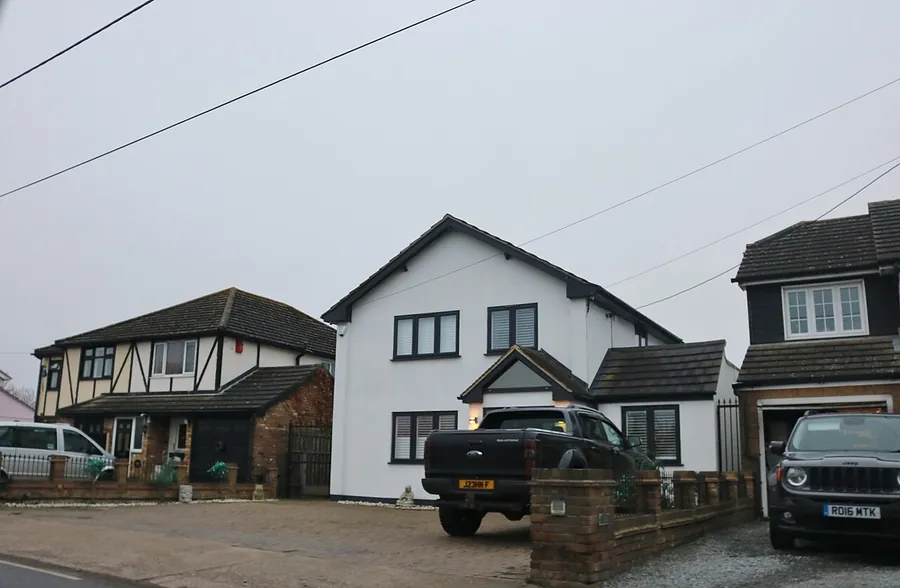
Resin bound on a good base is still flat and still smooth, slightly yellowed if the resin was not UV-stable, with moss in any shaded corner that never dries. A bad base shows as a crack following the line of the old slab. Repairs are visible. The edge is the thing to check before buying a house with one.
Block paving has settled a little where the car wheels sit and the joints have been weeded twice a year or sealed once. A few blocks have been lifted and relaid after a drain repair and you cannot tell which. If it was laid on a thin base it has ruts; if it was laid properly it has not, and that is the whole difference between a £75 and a £115 drive.
Tarmac has crumbled at any edge that was not restrained, dented where the car parks, and been patched once in a darker shade. On gravel ground it is probably fine for another five years. On clay it has a dip where the sub-base was not deep enough, and that dip holds a puddle that freezes. Our driveway repair service sees more tarmac edges than anything else.
So, for a 1930s semi in Hornchurch or Upminster: block paving if the car is going to be reversed on and off it every day and you want to be able to fix it; resin bound if the front is on show, the base is sound and the budget allows; tarmac if the budget does not, provided the saving goes into the edge and the drain. In every case keep a planted strip, and in every case ask what is going under the surface before you ask what colour it comes in.
If you want us to measure the front, check the ground and tell you which of the three we would lay on your house, book a free site visit in Hornchurch or Upminster.